How emerging technologies redistribute power—and what institutions must do to make their systems contestable, accountable, and repairable.
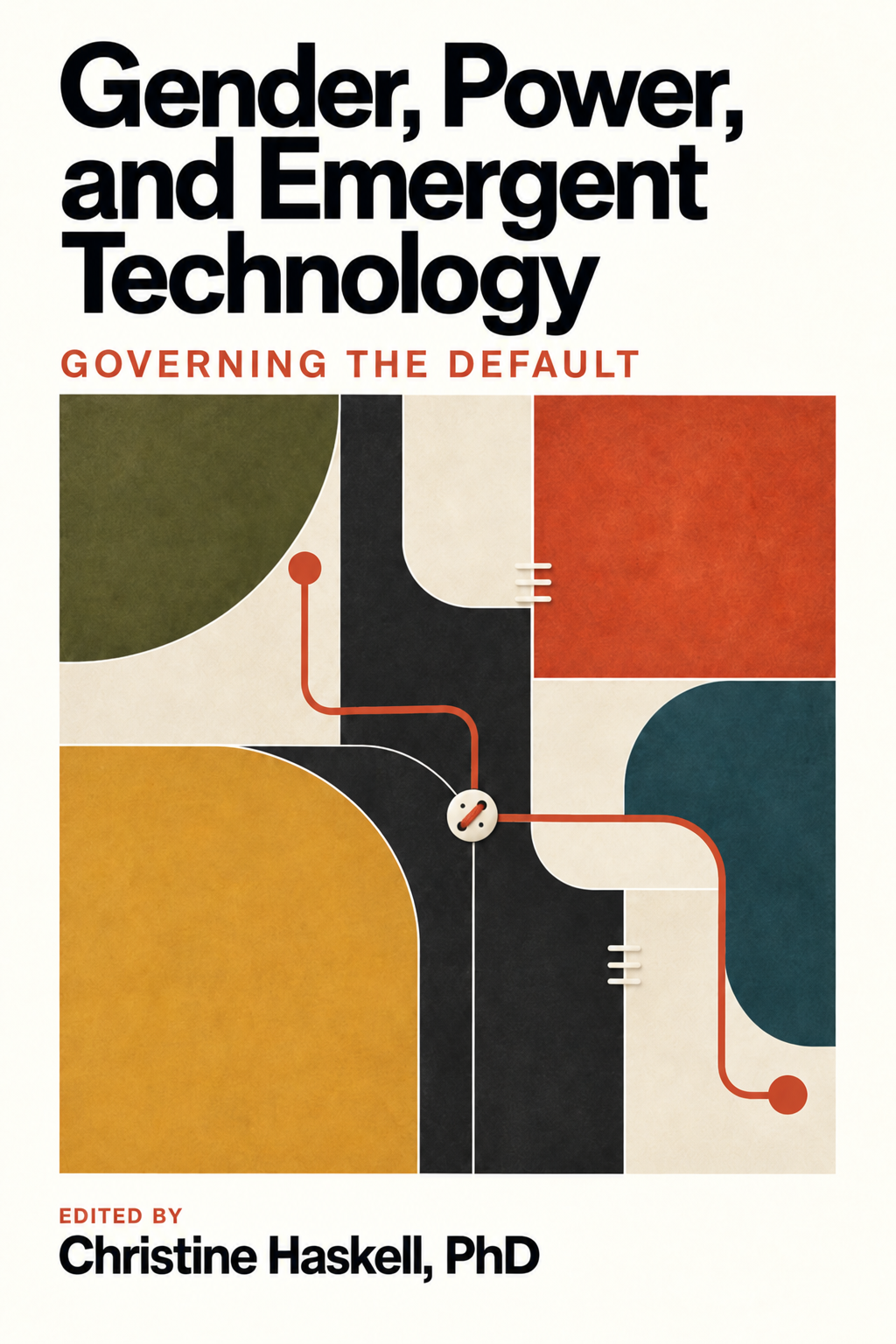
Book Cover Placeholder
Offers frameworks that help readers question defaults, surface harm, and design governance before exclusion is reproduced at scale.
Amanda Makulec
AUTHOR OF DASHBOARDS THAT DELIVER
Gender, Power and Emergent Technology
Governing the Default
WHY THIS VOLUME
Technology does not enter neutral institutions.
It inherits their defaults: about whose evidence counts, who absorbs the cross consequences, and what happens when harm occurs. Across eight chapters, contributors examine how emerging technologies redistribute authority, risk, care, and accountability—and offer research-grounded, practical ways to make those systems more contestable, accountable, and repairable.
FOUR QUESTIONS FOR A MORE JUST AND TECHNOLOGICAL FUTURE


BUILT FROM SITUATED KNOWLEDGE
Real people. Real experience. Broader possibilities.
Our contributors bring perspectives from education, public institutions, health, finance, organizational leadership, AI governance, and community practice. We span multiple generations and continents—showing what different evidence, different questions, and different futures can reveal.

EDUCATION

EDUCATION

HEALTHCARE

ORGANIZATIONAL LEADERSHIP
Different places. Shared purpose.




Christine Haskell, PhD
Scholar, consultant, and teacher at the intersection of data, systems, and behavior. Three decades of experience in technology and governance inform this volume’s call for relational accountability in AI-mediated institutions.
RIGOROUS SCHOLARSHIP
Interdisciplinary research grounded in real-world consequences.

DIVERSE VOICES
Scholars and practitioners across sectors and geographies.

PRACTICAL INSIGHTS
Frameworks and tools for governance in practice.

TEACHING RESOURCES
Custom-ready materials for instructors and learners.
WHAT THE BOOK OFFERS